

0
How Today’s Treatments are Changing the Face of Melanoma
Fifteen years ago, being diagnosed with late-stage melanoma skin cancer was considered a death sentence. While treatment was available, the outlook was grim: most people managed to live for less than a year from the time metastatic melanoma was diagnosed.However, the face of melanoma treatment has changed completely in the past decade. New melanoma drugs have taken a disease that was once almost always fatal to a condition that many people live with for years, even decades.The Miami Center for Dermatology knows how frightening a diagnosis of melanoma can be. That's why they offer their patients access to the latest advances in melanoma treatment, which have helped thousands of people extend their survival rates far beyond what was once thought possible.
Melanoma can strike anyone, but certain individuals may be at higher risk. The first step to determining if you need treatment is to understand what those risks and signs are.There are certain risks that can put an individual at a higher risk for melanoma. These include:
Melanoma treatment has advanced significantly, but there are new challenges that immunotherapy poses. This is because when the brakes are taken off the immune system, it sometimes ends up attacking the body.
 Who Needs Treatment for Melanoma?
Melanoma can strike anyone, but certain individuals may be at higher risk. The first step to determining if you need treatment is to understand what those risks and signs are.There are certain risks that can put an individual at a higher risk for melanoma. These include: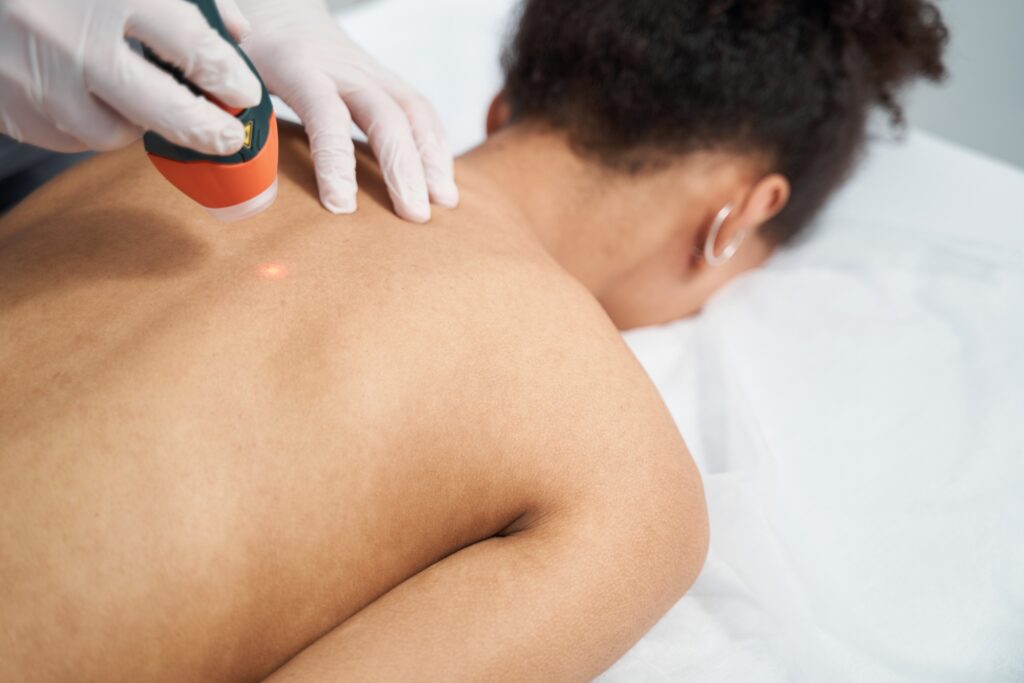 Who Needs Treatment for Melanoma?
- Having light skin and a history of sunburns.
- Having a lot of sun exposure.
- Having unusual moles.
- Having a family history of skin cancer.
- Having a weakened immune system.
Melanoma Basic Treatment Options
Melanoma treatment has undergone tremendous changes over the years. While surgery was once the only treatment available to melanoma patients, today there are many other options available to deal with melanoma. In fact, today’s treatment options involve combining treatments to achieve better results. While surgery still remains one of the major treatment options for early-stage melanoma, today, there are many other treatment options available to deal with melanoma that has spread to other parts of the body.1. Surgical Removal
While surgery remains one of the major treatment options for early-stage melanoma that has not spread to other parts of the body, it is the most effective treatment option. In fact, the majority of people with early-stage melanoma who undergo surgery to remove the tumor experience positive results.2. Immunotherapy
The biggest breakthrough in melanoma treatment is immunotherapy. While traditional treatment options involve using drugs to kill cancer cells, immunotherapy uses the body’s immune system to fight cancer. It is one of the most commonly used treatment options to deal with melanoma. In fact, many immunotherapy drugs have proven to be effective in improving survival rates. These immunotherapy drugs are called immune checkpoint inhibitors. They are effective in releasing the brakes on the immune system to better target cancer. It has been found that immunotherapy drugs used in combination are more effective.Some melanomas have specific genetic changes. For instance, half of melanomas have a mutation in the BRAF gene. Medications that target these changes help slow the progress of the disease. These are molecularly targeted therapies that are more likely to have fewer side effects compared to chemotherapy. Various targeted therapies are available as pills. This is good news for those who cannot receive infusions. These are often used with other treatments such as immunotherapy.3. Tumor-Infiltrating Lymphocyte (TIL) Therapy
Another important development is TIL therapy. In this therapy, the body is assisted to fight the cancer using its own cells. The cells that have already infiltrated the tumor are used. Doctors remove these cells from the body. After that, these cells are grown in the lab. Finally, the cells are introduced into the body in large numbers. TIL therapy is effective. It is especially effective for the treatment of melanoma.4. New Treatments (Emerging and Experimental)
Research is continually being conducted to improve the options available for the treatment of melanoma. Various clinical trials are being conducted. These trials are aimed at creating more options for the treatment of melanoma. Cancer vaccines and drug combinations are being studied. The goal is to more accurately treat melanoma. Vaccines that are personalized using the body's natural messenger are being studied. These are aimed at preventing cancer recurrence. The vaccines are especially important for those with a high risk of cancer recurrence. Other combinations of drugs are being studied. The goal is to prevent the spread of cancer to hard-to-reach areas such as the brain. Although these are not yet standard treatment options everywhere, these are the hopeful horizons of melanoma treatment.Immunotherapy Treatment for Melanoma
The major breakthrough in the treatment of melanoma was achieved when the immune system was trained to fight cancer on its own. This was achieved by inhibiting proteins that prevent the immune system from attacking cancer cells. Immunotherapy is the most common type of drug treatment for melanoma. These immunotherapy drugs include:- PD-1 Inhibitors such as pembrolizumab and nivolumab help the immune system fight cancer more effectively. This has become the main treatment for melanoma that has spread to other areas of the body.
- CTLA-4 Inhibitors such as ipilimumab, activate the immune system at the beginning of the fight against cancer, enabling it to fight cancer throughout the body.
- Combination Therapy, which is a mix of the two drugs to ensure the immune system is activated to fight cancer most effectively, though this comes with many side effects.
Treatment Options for Different Stages of Melanoma
Not all melanoma patients will take the same pathway of treatment. The stage of melanoma will determine the best course of action.Stage 0 melanoma and melanoma in situ
- The melanoma is removed completely through surgery
- No chemotherapy, radiation, or immunotherapy needed
- Close monitoring to catch a recurrence early
Stage 1 and 2 melanoma
- Surgery is the first line of treatment
- A biopsy of the sentinel lymph node is recommended to check for cancer cells
- Immunotherapy is an option to decrease the chances of recurrence
Stage 3 melanoma
- Surgery to remove the melanoma cells
- Immunotherapy after surgery is now standard practice
- Neoadjuvant therapy is now being implemented, where the treatment is given before surgery
- This has shown better results compared to adjuvant therapy
Stage 4 melanoma
- Combination immunotherapy, nivolumab/ipilimumab, has a 50-60% response rate
- Targeted therapy is used when the melanoma cells have a specific genetic mutation
- Combination therapy is used when targeted therapy is not effective
- Clinical trials are being conducted to find better treatment options for melanoma
Targeted Therapy: Treatment That Uses Genetic Information
Approximately half of cutaneous melanoma tumors have a mutation in the BRAF gene that triggers the uncontrolled growth of cancer cells. In such cases, targeted therapy is a significant tool in the crusade against melanoma.- BRAF inhibitors and MEK inhibitors stop the growth of melanoma cells by targeting specific proteins.
- Targeted therapy minimizes the risk of adverse reactions.
- Targeted therapy can produce quick results because tumors often recede within weeks.
- Targeted therapy is most effective when combined with immunotherapy to prevent recurrence.
What Treatment Success Actually Looks Like
The National Cancer Institute and other top comprehensive cancer centers track the results of all stages of melanoma, and the statistics clearly show how the diagnosis and treatment of this type of cancer have improved over time.Improvements in Survival Rates:- Survival rates for people with Stage IV melanoma have increased from less than 20% to nearly 50% for those who respond to new immunotherapy treatments.
- Research shows that more than half of those who receive combination immunotherapy have five-year or longer survival rates.
Factors that Influence the Likelihood of Treatment Success
- The genetic mutations in your melanoma cells
- How well your immune system responds to treatment
- How widespread the cancer is and where it is located in the body
- Your overall health and how well you tolerate treatment
- The stage of your cancer when you first begin treatment
 Managing Treatment and What to Expect
Melanoma treatment has advanced significantly, but there are new challenges that immunotherapy poses. This is because when the brakes are taken off the immune system, it sometimes ends up attacking the body. Managing Treatment and What to Expect
Common side effects of melanoma treatment
- Skin rash or itching, which can be treated with creams
- Digestive problems, which can be treated with medication for diarrhea
- Fatigue, which can improve over time as the body becomes accustomed to the treatment
- Thyroid problems, which can be treated with hormone replacement
- Some people are treated for a specific period of one to two years
- Others are treated for as long as the treatment is effective
- Some people can stop treatment altogether if the disease does not recur
What This Means for Newly Diagnosed Patients
So, if you have recently been diagnosed with melanoma, here are the most important things you need to know:Key Points to Keep in Mind:- Melanoma is one of the most treatable forms of cancer, especially when detected early. Most melanomas are detected at stage 0, I, or II, and the removal of the melanoma through surgery can cure the cancer.
- There is no need to rush into any decisions. In most cases, there is no urgent need to treat melanoma.
- It is best to consult doctors specializing in melanoma. It has been observed that hospitals specializing in treating this serious skin cancer achieve higher success rates.
- Treatment options for melanoma have improved dramatically. In the case of late-stage melanoma, there is indeed hope with the new treatment options available.
What Patients Should Ask Their Doctor
If you or a loved one receives a melanoma diagnosis, it’s natural to have many questions. Here are important topics to discuss with your dermatologist or oncologist:- What stage is the melanoma, and what does that mean for treatment?
- Should surgery be my first step?
- Are immunotherapy or targeted therapy options for me?
- What are the potential side effects of each treatment?
- Are there clinical trials I might consider?


About Post Author