
0
How to Deal with Hair Thinning for Women
Most women notice it gradually. A little more hair on the shower floor. A part that looks wider than it used to. A ponytail that feels thinner between the fingers. By the time thinning hair becomes obvious to others, it has often been quietly progressing for months.The good news: there's more you can do about it than most people realize, and getting the right diagnosis early makes a real difference. At Miami Center for Dermatology, Dr. Deborah Longwill has been treating hair loss in women across South Florida since founding the practice in 1992, bringing over 30 years of board-certified dermatology experience to what is, for many patients, a deeply personal concern.
Hair loss starts at the follicle level. In healthy hair, most follicles are in anagen, the active growing phase. With hair loss, follicles shift to a resting phase too soon, producing shorter, finer strands with each cycle until eventually nothing visible grows back. There's also follicle miniaturization, in which follicles gradually shrink—producing hair that goes from full and healthy to fine and thin, then to barely visible stubble, and eventually to nothing at all. When this miniaturization is driven by androgens, it leads to Female Pattern Hair Loss (FPHL).
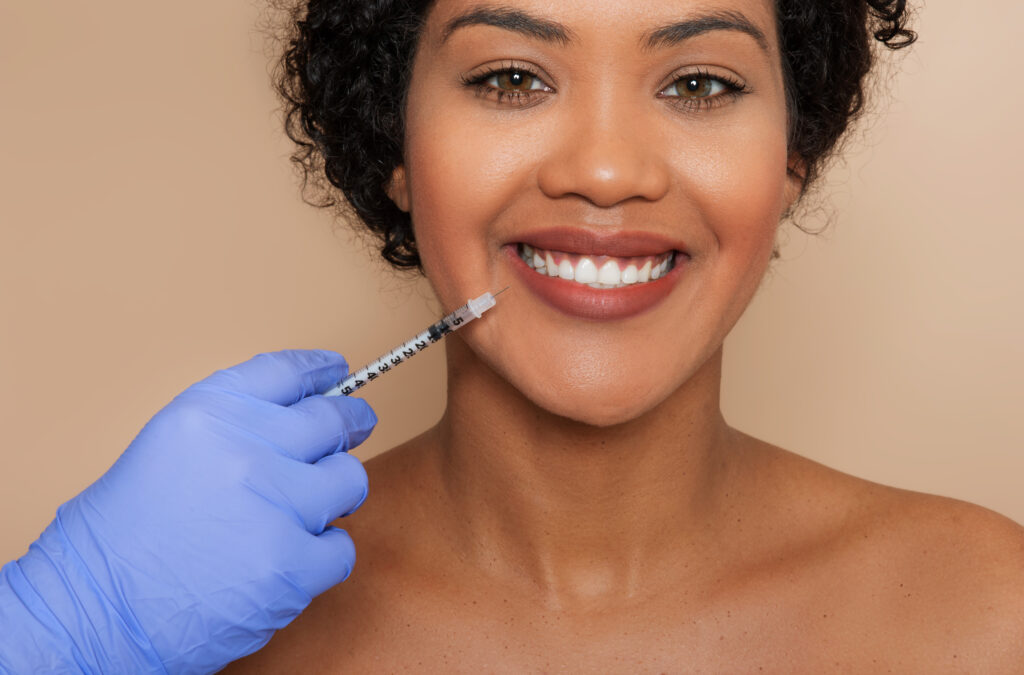
Treatments available that can be effective include minoxidil, which is the only FDA-approved medication for women with this type of hair loss. Applied directly to the scalp, it prolongs the growth phase and promotes a thicker hair shaft. Results usually take around four to six months and only last as long as you keep using it—stop, and the gains reverse. It is available as a 2% or 5% solution, and you can see what works best for you with a board-certified dermatologist who can also show you how to apply it.Other options include androgen-blocking medications, laser treatment, PRP, and—for suitable candidates—surgical hair restoration at Miami Center for Dermatology, including NeoGraft, a minimally invasive transplant procedure that uses follicular unit extraction. If you're going through perimenopause or menopause and thinning is part of the picture, hormone replacement—including bioidentical options—may be worth considering. Dr. Longwill's practice does hair loss hormone testing specifically for women.
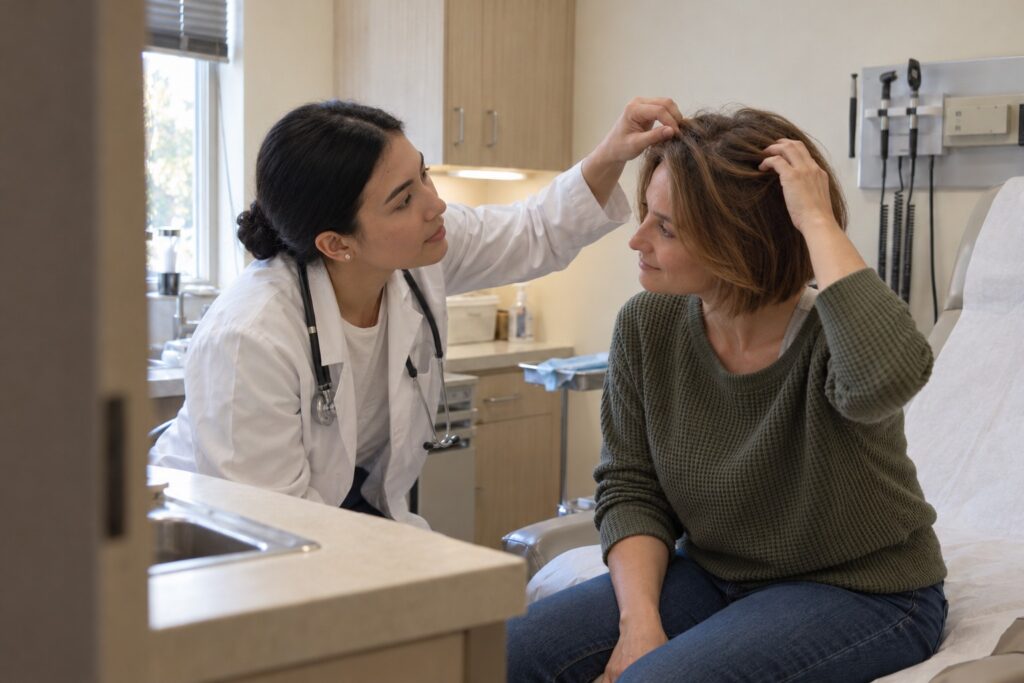
The takeaway is simple: don't delay evaluation, because timing genuinely affects how well treatment works. Once a follicle has been dormant long enough, it can't be revived—that window doesn't reopen. Hair loss is a medical condition, not a vanity problem, and early intervention can make a significant difference in results. If your part looks wider, your ponytail feels thinner, or you're seeing more hair on your pillow and in the drain, it's time to book an appointment. This evaluation involves a scalp examination, medical history review and lab tests for thyroid, iron and hormone imbalances. Miami Center for Dermatology has two South Florida offices. Call 305-279-7546 or schedule an evaluation or hair loss hormone testing with Dr. Longwill.
 Thinning Hair Starts Inside the Hair Follicle
Hair loss starts at the follicle level. In healthy hair, most follicles are in anagen, the active growing phase. With hair loss, follicles shift to a resting phase too soon, producing shorter, finer strands with each cycle until eventually nothing visible grows back. There's also follicle miniaturization, in which follicles gradually shrink—producing hair that goes from full and healthy to fine and thin, then to barely visible stubble, and eventually to nothing at all. When this miniaturization is driven by androgens, it leads to Female Pattern Hair Loss (FPHL). 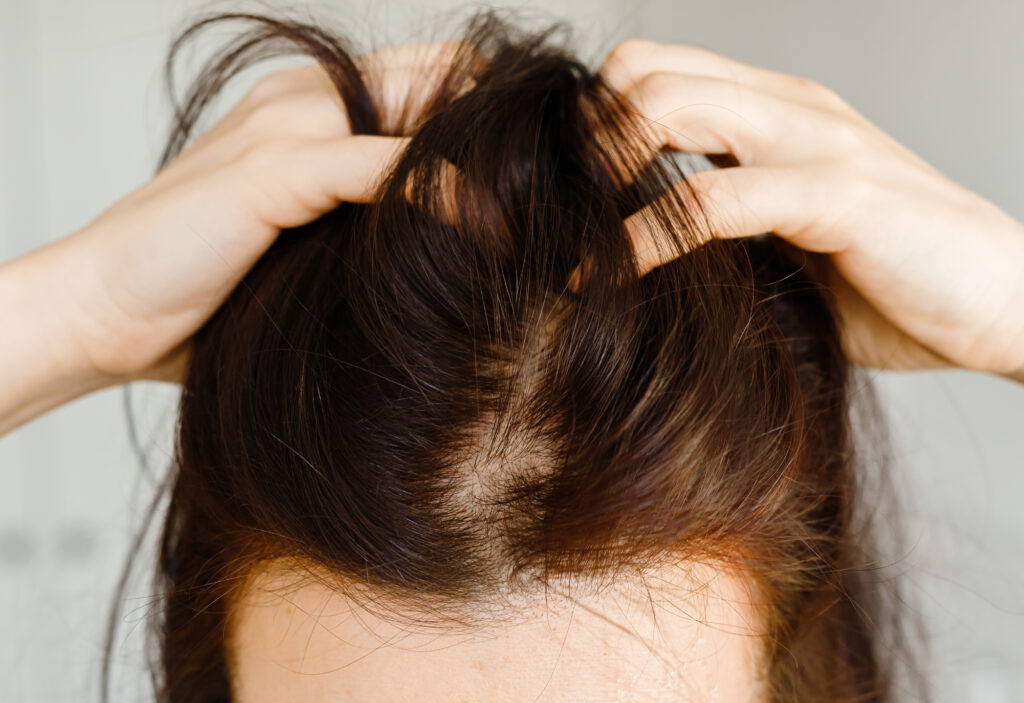 Thinning Hair Starts Inside the Hair Follicle
Understanding FPHL and Androgenetic Alopecia
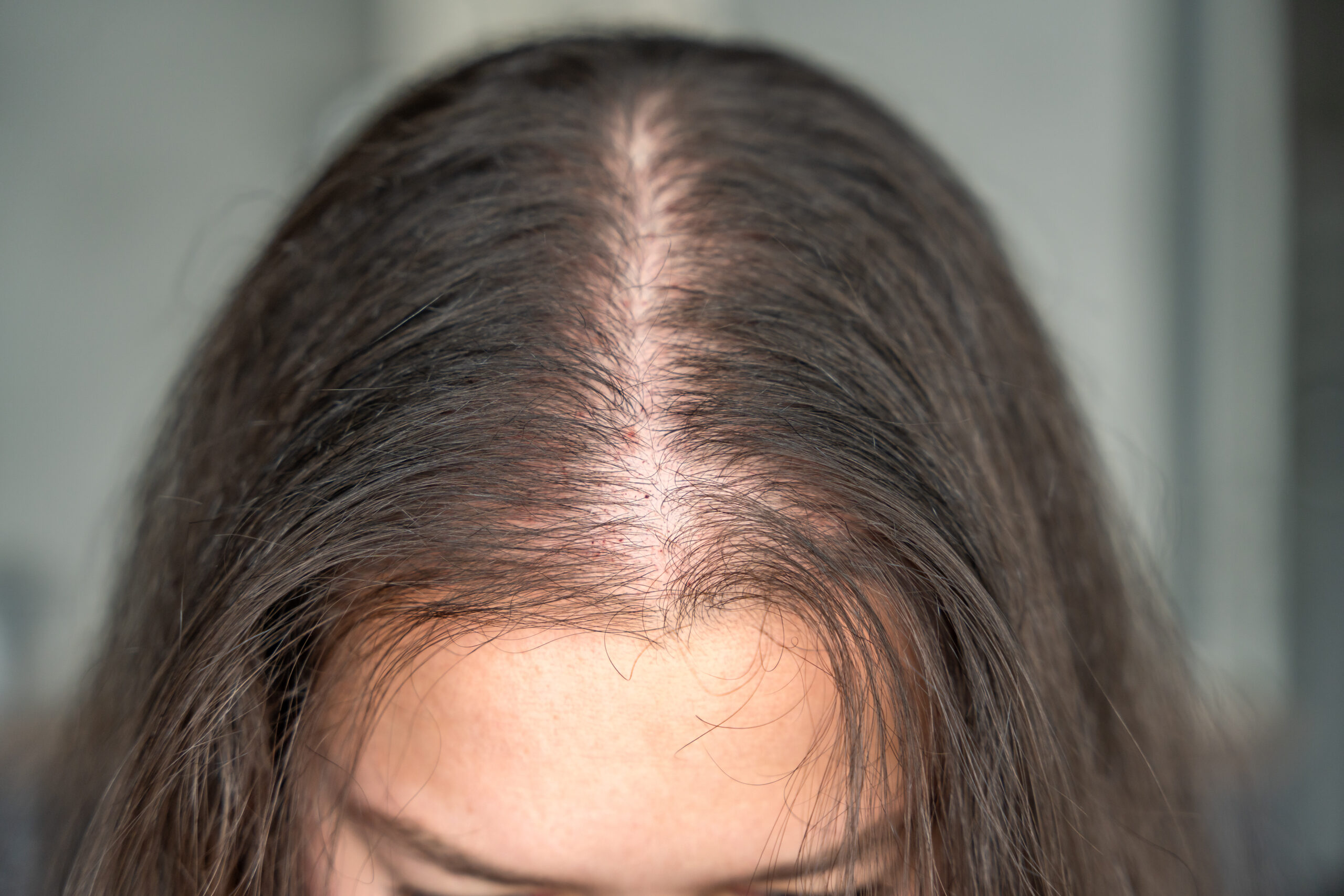
FPHL is a common type of hair loss in women, and it differs from the way men typically bald. Usually, women will experience thinning hair at the parting, midscalp and on the crown of the scalp, but not usually at the frontal hairline.The Ludwig classification is used to determine severity and ranges from mild thinning at the part to diffuse thinning of the entire scalp. In women, the hairline does not usually recede all the way, as it does in men.FPHL is more common in women with a family history of balding—mothers, grandmothers, aunts, and so on. The condition is also linked to androgens (male hormones), even though women with FPHL often have perfectly normal androgen levels. That's why it might be a misnomer to call it "androgenetic alopecia."Other Common Causes of Hair Loss in Women
FPHL is only one of many causes of hair loss. Some other conditions that commonly cause female hair loss include:Telogen effluvium: One of the more subtle causes of hair loss that women experience is telogen effluvium, or a sudden loss of hair. It's typically triggered by a stressful event—surgery, trauma, illness, or rapid weight loss—but often doesn't show up until two to three months afterward. It usually resolves on its own, though the original trigger often isn't identified until well after the shedding starts. Hormonal factors: Hormonal changes are another common cause, and they can trigger excessive shedding. This can happen with events such as menopause, after childbirth, or with certain diseases such as thyroid conditions or polycystic ovary syndrome (PCOS). During pre-menopausal years, estrogen and progesterone help promote the duration of the anagen phase. But as these hormones decline during menopause, hair begins to shed faster than normal. Iron deficiency is also easy to overlook, especially when it hasn't yet caused anemia—something common in women who are still menstruating. Low ferritin can occur without anemia and still speed up shedding, which is why a simple, easily ordered blood test is worth doing. Alopecia areata: A distinct autoimmune condition that causes patchy hair loss in specific areas rather than overall thinning. It requires a different treatment approach from FPHL or telogen effluvium. Hair Loss Treatment Options
Treatments available that can be effective include minoxidil, which is the only FDA-approved medication for women with this type of hair loss. Applied directly to the scalp, it prolongs the growth phase and promotes a thicker hair shaft. Results usually take around four to six months and only last as long as you keep using it—stop, and the gains reverse. It is available as a 2% or 5% solution, and you can see what works best for you with a board-certified dermatologist who can also show you how to apply it.Other options include androgen-blocking medications, laser treatment, PRP, and—for suitable candidates—surgical hair restoration at Miami Center for Dermatology, including NeoGraft, a minimally invasive transplant procedure that uses follicular unit extraction. If you're going through perimenopause or menopause and thinning is part of the picture, hormone replacement—including bioidentical options—may be worth considering. Dr. Longwill's practice does hair loss hormone testing specifically for women. Hair Loss Treatment Options
 Why You Should See a Dermatologist Early
The takeaway is simple: don't delay evaluation, because timing genuinely affects how well treatment works. Once a follicle has been dormant long enough, it can't be revived—that window doesn't reopen. Hair loss is a medical condition, not a vanity problem, and early intervention can make a significant difference in results. If your part looks wider, your ponytail feels thinner, or you're seeing more hair on your pillow and in the drain, it's time to book an appointment. This evaluation involves a scalp examination, medical history review and lab tests for thyroid, iron and hormone imbalances. Miami Center for Dermatology has two South Florida offices. Call 305-279-7546 or schedule an evaluation or hair loss hormone testing with Dr. Longwill. Why You Should See a Dermatologist Early


About Post Author