Functional Medicine at Miami Center for Dermatology: Treating Skin Issues at the Root
Most people have had the experience: you go to the doctor, describe what's wrong, walk out with a prescription, and a few months later you're back describing the same problem. The prescription managed something. It didn't fix anything.That cycle is exactly what brings a growing number of patients to Miami Center for Dermatology. Under the direction of Dr. Deborah Longwill, the practice has built out a full functional medicine program alongside its dermatology services, specifically for patients who are tired of treating symptoms while the real problem continues, unaddressed, underneath.
Understanding Functional Medicine: A Quiet Transformation of Healthcare
In a nutshell: a functional medicine doctor won't ask, "What drug fits this condition?" They'll ask, "What is driving this?"That difference is huge. Functional medicine considers the interactions among hormones, metabolism, the gut microbiome, immune function, inflammation, and lifestyle factors, and asks: "How are all of these interacting in this patient?" It then tries to discover and correct the root cause. That's a different approach than traditional medicine, where a patient is simply told, "You have this condition, so here's the standard treatment."This difference is most important in the case of chronic conditions and recurring symptoms. Allergies, eczema, and dermatitis related to internal imbalance; hormonal problems, gut issues, low energy, brain fog, mood swings, and insomnia — none of these ailments necessarily have a single cause, and none can typically be solved with a single pill.
Why Dermatology and Functional Medicine Complement Each Other
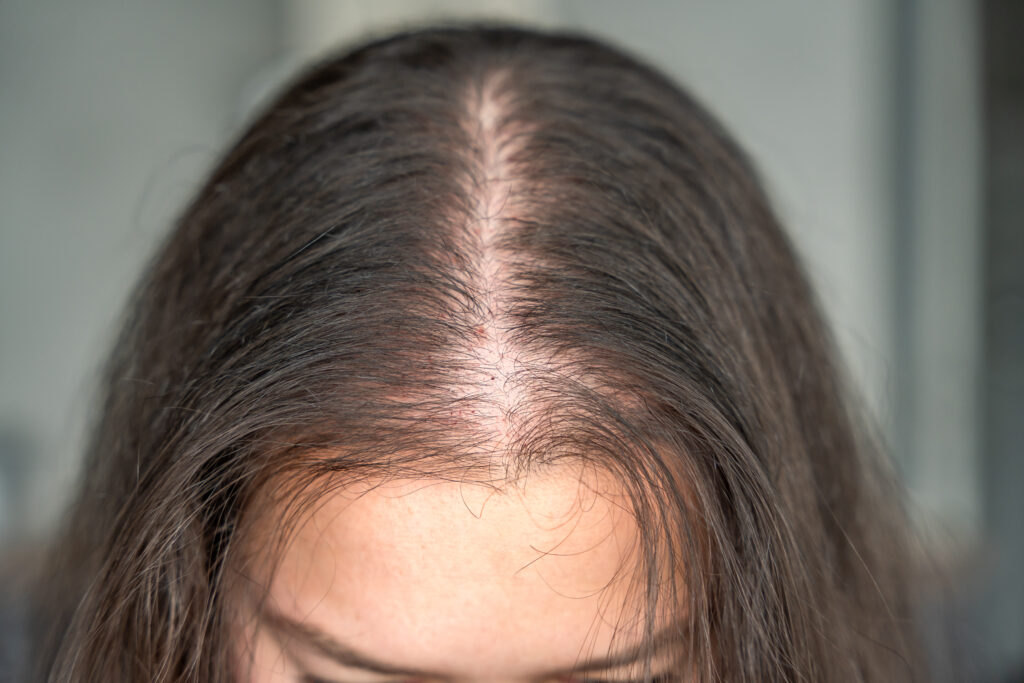
The skin doesn't exist in a bubble. It's constantly reflecting what's going on internally. Talk to an experienced dermatologist and you'll hear about acne tied to endocrine imbalance, rosacea tied to gut imbalance, or hair loss tied to thyroid imbalance.Dr. Longwill created a functional medicine offering at Miami Center for Dermatology because she saw the need to take a deeper, broader view when treating skin disease. A patient with persistent skin complaints, for instance, may need a comprehensive medical review, blood tests, and hormone testing before they're ready for a topical regimen or laser therapy. Often, hormonal acne treatment really begins not with the skin, but with uncovering what's driving the hormone imbalance in the first place.This is why Miami Center for Dermatology offers functional dermatology and internal medicine services in the same location — treating not just the skin, but the patient.
IFM Certification: What It Takes to Become a Functional Medicine Practitioner
In the medical profession, the term "functional medicine" is not a regulated designation. Many practitioners call themselves "functional medicine" providers without any real specialized training in the field.However, there is one U.S. certifying body: the Institute for Functional Medicine (IFM). The IFM provides continuing education and certification to physicians, nurse practitioners, physician associates, and other licensed clinicians. You must be actively licensed, complete IFM's full core curriculum, and pass an extensive final exam to be certified. It's a demanding process, and it fundamentally reshapes how a clinician approaches patient care.Miami Center for Dermatology has a complete team of care providers. Physician associates Jessy Diaz, and Jason Santos work in the functional medicine program under the guidance of Dr. Longwill. Patients likely won't be seeing just one provider when they walk in.
How the Functional Medicine Consultation Works
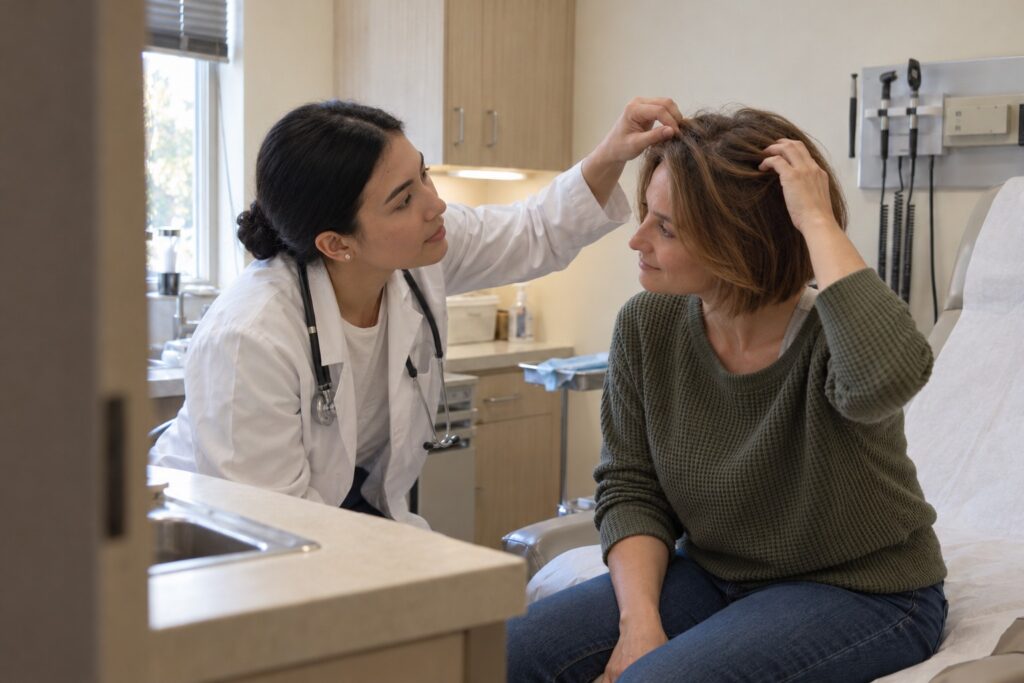
Here's how a functional medicine consultation at Miami Center for Dermatology differs from a typical visit:First of all, it's not a 15-minute visit. It includes a detailed intake, a comprehensive discussion of your medical history and symptoms, a review of existing labs, and a discussion of your desired outcomes. The team creates the complete health picture first, then moves forward with its recommendations.From that picture, the medical team will often order further testing to help pinpoint the cause. It could be a panel of blood tests covering hormones, inflammation, immunity, gut microbiome, metabolic function, and nutritional status — or it could be an entirely different set of tests. Tests are selected based on clinical suspicion about what may be occurring in your case. From there, a personalized treatment plan can involve hormone optimization, nutritional guidance, gut health support, stress management, or other treatments based on your lab results. Someone dealing with hormonal hair loss starts at a different point than someone looking to improve energy and digestion. That's intentional — each plan reflects that patient's own labs and medical history, which won't match anyone else's.
Chronic Disease and Why Functional Medicine Doctors Look for the Root Cause
The word "chronic" refers to conditions that don't respond to quick fixes. According to the CDC, six out of ten American adults have at least one chronic disease, and four out of ten have two or more. These include diabetes, heart disease, and inflammatory conditions, as well as harder-to-name issues like fatigue, recurring skin problems, persistent hormonal issues, and long-standing mood instability.Conventional medicine is exceptional at acute care — infections, surgical emergencies, and injuries. It tends to fall short with long-running, multi-system problems that have no single pathogen to blame. Functional medicine emerged to address that gap. The goal is to understand the underlying causes and treat them, rather than manage symptoms alone.For someone seeking treatment for skin conditions rooted in an internal imbalance, this shift in perspective is significant. Treating a recurring skin problem topically without addressing an underlying driver like gut dysbiosis or a hormonal imbalance usually leads to only a temporary result — and a return visit six months later, still asking, "Why isn't this going away?"
How Patients With Ongoing Health Concerns Respond to This Approach
Dr. Longwill's patients often describe the changes as subtle and cumulative rather than dramatic or overnight. Those changes include increased energy, better sleep, more stable moods, improved digestion, and, most importantly in this practice, clearer skin as flare-ups and breakouts settle down when the internal drivers are addressed.This isn't a one-and-done prescription. The treatment plan is followed and adjusted as markers improve. That means follow-up visits, protocol changes, and evolving plans — which makes sense, since any plan built on real data should shift as the data shifts.The patients who do best are those dealing with chronic, recurring health concerns who are willing to take some ownership of the solution. This approach asks more of the patient than simply "take this twice a day." It asks them to take an honest look at lifestyle, nutrition, and stress — not as a criticism, just as a frank description of what the work involves.
The Functional Medicine Model in Practice at Miami Center for Dermatology
To support this model, Miami Center for Dermatology offers a full clinical program that includes bioidentical hormone therapy, hormone replacement for women, testosterone therapy, and the diagnostic testing that underpins a truly personalized treatment plan.Even with that broader scope, this is still a dermatology practice. Patients seeking hormone optimization are often also managing skin conditions, hair loss, or changes in skin quality. Having one team address these concerns both internally and externally isn't just convenient; it's a clinical advantage.If you're in the Miami area and you're tired of treating symptoms and ready to get to the root cause of what's going on, consider scheduling a consultation with Miami Center for Dermatology.
This mode enables people with epilepsy to use the website safely by eliminating the risk of seizures that result from flashing or blinking animations and risky color combinations.
Visually Impaired Mode
Improves website's visuals
This mode adjusts the website for the convenience of users with visual impairments such as Degrading Eyesight, Tunnel Vision, Cataract, Glaucoma, and others.
Cognitive Disability Mode
Helps to focus on specific content
This mode provides different assistive options to help users with cognitive impairments such as Dyslexia, Autism, CVA, and others, to focus on the essential elements of the website more easily.
ADHD Friendly Mode
Reduces distractions and improve focus
This mode helps users with ADHD and Neurodevelopmental disorders to read, browse, and focus on the main website elements more easily while significantly reducing distractions.
Blindness Mode
Allows using the site with your screen-reader
This mode configures the website to be compatible with screen-readers such as JAWS, NVDA, VoiceOver, and TalkBack. A screen-reader is software for blind users that is installed on a computer and smartphone, and websites must be compatible with it.
Online Dictionary
Readable Experience
Content Scaling
Default
Text Magnifier
Readable Font
Dyslexia Friendly
Highlight Titles
Highlight Links
Font Sizing
Default
Line Height
Default
Letter Spacing
Default
Left Aligned
Center Aligned
Right Aligned
Visually Pleasing Experience
Dark Contrast
Light Contrast
Monochrome
High Contrast
High Saturation
Low Saturation
Adjust Text Colors
Adjust Title Colors
Adjust Background Colors
Easy Orientation
Mute Sounds
Hide Images
Hide Emoji
Reading Guide
Stop Animations
Reading Mask
Highlight Hover
Highlight Focus
Big Dark Cursor
Big Light Cursor
Cognitive Reading
Virtual Keyboard
Navigation Keys
Voice Navigation
Accessibility Statement
miamicenterfordermatology.com
November 6, 2026
Compliance status
We firmly believe that the internet should be available and accessible to anyone, and are committed to providing a website that is accessible to the widest possible audience,
regardless of circumstance and ability.
To fulfill this, we aim to adhere as strictly as possible to the World Wide Web Consortium’s (W3C) Web Content Accessibility Guidelines 2.1 (WCAG 2.1) at the AA level.
These guidelines explain how to make web content accessible to people with a wide array of disabilities. Complying with those guidelines helps us ensure that the website is accessible
to all people: blind people, people with motor impairments, visual impairment, cognitive disabilities, and more.
This website utilizes various technologies that are meant to make it as accessible as possible at all times. We utilize an accessibility interface that allows persons with specific
disabilities to adjust the website’s UI (user interface) and design it to their personal needs.
Additionally, the website utilizes an AI-based application that runs in the background and optimizes its accessibility level constantly. This application remediates the website’s HTML,
adapts Its functionality and behavior for screen-readers used by the blind users, and for keyboard functions used by individuals with motor impairments.
If you’ve found a malfunction or have ideas for improvement, we’ll be happy to hear from you. You can reach out to the website’s operators by using the following email
Screen-reader and keyboard navigation
Our website implements the ARIA attributes (Accessible Rich Internet Applications) technique, alongside various different behavioral changes, to ensure blind users visiting with
screen-readers are able to read, comprehend, and enjoy the website’s functions. As soon as a user with a screen-reader enters your site, they immediately receive
a prompt to enter the Screen-Reader Profile so they can browse and operate your site effectively. Here’s how our website covers some of the most important screen-reader requirements,
alongside console screenshots of code examples:
Screen-reader optimization: we run a background process that learns the website’s components from top to bottom, to ensure ongoing compliance even when updating the website.
In this process, we provide screen-readers with meaningful data using the ARIA set of attributes. For example, we provide accurate form labels;
descriptions for actionable icons (social media icons, search icons, cart icons, etc.); validation guidance for form inputs; element roles such as buttons, menus, modal dialogues (popups),
and others. Additionally, the background process scans all the website’s images and provides an accurate and meaningful image-object-recognition-based description as an ALT (alternate text) tag
for images that are not described. It will also extract texts that are embedded within the image, using an OCR (optical character recognition) technology.
To turn on screen-reader adjustments at any time, users need only to press the Alt+1 keyboard combination. Screen-reader users also get automatic announcements to turn the Screen-reader mode on
as soon as they enter the website.
These adjustments are compatible with all popular screen readers, including JAWS and NVDA.
Keyboard navigation optimization: The background process also adjusts the website’s HTML, and adds various behaviors using JavaScript code to make the website operable by the keyboard. This includes the ability to navigate the website using the Tab and Shift+Tab keys, operate dropdowns with the arrow keys, close them with Esc, trigger buttons and links using the Enter key, navigate between radio and checkbox elements using the arrow keys, and fill them in with the Spacebar or Enter key.Additionally, keyboard users will find quick-navigation and content-skip menus, available at any time by clicking Alt+1, or as the first elements of the site while navigating with the keyboard. The background process also handles triggered popups by moving the keyboard focus towards them as soon as they appear, and not allow the focus drift outside it.
Users can also use shortcuts such as “M” (menus), “H” (headings), “F” (forms), “B” (buttons), and “G” (graphics) to jump to specific elements.
Disability profiles supported in our website
Epilepsy Safe Mode: this profile enables people with epilepsy to use the website safely by eliminating the risk of seizures that result from flashing or blinking animations and risky color combinations.
Visually Impaired Mode: this mode adjusts the website for the convenience of users with visual impairments such as Degrading Eyesight, Tunnel Vision, Cataract, Glaucoma, and others.
Cognitive Disability Mode: this mode provides different assistive options to help users with cognitive impairments such as Dyslexia, Autism, CVA, and others, to focus on the essential elements of the website more easily.
ADHD Friendly Mode: this mode helps users with ADHD and Neurodevelopmental disorders to read, browse, and focus on the main website elements more easily while significantly reducing distractions.
Blindness Mode: this mode configures the website to be compatible with screen-readers such as JAWS, NVDA, VoiceOver, and TalkBack. A screen-reader is software for blind users that is installed on a computer and smartphone, and websites must be compatible with it.
Keyboard Navigation Profile (Motor-Impaired): this profile enables motor-impaired persons to operate the website using the keyboard Tab, Shift+Tab, and the Enter keys. Users can also use shortcuts such as “M” (menus), “H” (headings), “F” (forms), “B” (buttons), and “G” (graphics) to jump to specific elements.
Additional UI, design, and readability adjustments
Font adjustments – users, can increase and decrease its size, change its family (type), adjust the spacing, alignment, line height, and more.
Color adjustments – users can select various color contrast profiles such as light, dark, inverted, and monochrome. Additionally, users can swap color schemes of titles, texts, and backgrounds, with over seven different coloring options.
Animations – person with epilepsy can stop all running animations with the click of a button. Animations controlled by the interface include videos, GIFs, and CSS flashing transitions.
Content highlighting – users can choose to emphasize important elements such as links and titles. They can also choose to highlight focused or hovered elements only.
Audio muting – users with hearing devices may experience headaches or other issues due to automatic audio playing. This option lets users mute the entire website instantly.
Cognitive disorders – we utilize a search engine that is linked to Wikipedia and Wiktionary, allowing people with cognitive disorders to decipher meanings of phrases, initials, slang, and others.
Additional functions – we provide users the option to change cursor color and size, use a printing mode, enable a virtual keyboard, and many other functions.
Browser and assistive technology compatibility
We aim to support the widest array of browsers and assistive technologies as possible, so our users can choose the best fitting tools for them, with as few limitations as possible. Therefore, we have worked very hard to be able to support all major systems that comprise over 95% of the user market share including Google Chrome, Mozilla Firefox, Apple Safari, Opera and Microsoft Edge, JAWS and NVDA (screen readers).
Notes, comments, and feedback
Despite our very best efforts to allow anybody to adjust the website to their needs. There may still be pages or sections that are not fully accessible, are in the process of becoming accessible, or are lacking an adequate technological solution to make them accessible. Still, we are continually improving our accessibility, adding, updating and improving its options and features, and developing and adopting new technologies. All this is meant to reach the optimal level of accessibility, following technological advancements. For any assistance, please reach out to